Showing posts with label church. Show all posts

Monday, July 31, 2017

Inaugural Church Trading Deadline

Today marked the trading deadline for the inaugural Church Staff Draft. After the World Council of Churches agreed earlier this year to facilitate this draft there's been considerable interest in which churches would make a move. As the dust settles from a flurry of late trades this afternoon, this is the new American church landscape:

Brooklyn Tabernacle Choir for John Ortberg
This long rumored trade was completed prior to lunch. Both sides are hopeful that a change of scenery of reinvigorate their ministry.

While Menlo Park Presbyterian members respect Ortberg's willingness to get out of the boat to walk on water, they noted that his sermon to book ratio has been in decline in recent years. He's often padded his production numbers by producing video series, and small group guides. An anonymous source observed, "For a long time we could rely on him for home runs. Lately, he's been relying on an increasing number of singles to get on base. Perhaps a new clubhouse will give him the fresh perspective he's been missing."

In New York, the BTC seemed like an odd trade partner, but believe they have what it takes to enliven the Presbyterian choir pen. BTC are known for the energy they bring to the mound. They'll prove particularly valuable if the preacher decides to extend the service to extra innings, as they have a lot of experience performing late.

Bill Hybels for David Yonggi Cho
Bill Hybels foreshadowed this trade with the recent Willow Creek publication Move. When church leadership were approached they reflected fondly upon Hybel's longevity as a charter member of the church. Bill has been a clutch hitter for years, but recently has concentrated more on getting walks across the room. While that has proven effective at getting on base, the church is looking for something that makes a bigger splash.

The church recently conducted a self-evaluation that REVEALed some weaknesses in the approach to this point. By bringing in Yonggi Cho as an international trade agent the church believes it can realistically grow from 24,000 to 100,000 by taking things one small group at a time. Meanwhile, Bill is reportedly excited at the prospect of learning Korean over the next 6 months before launching his preaching ministry in Seoul.

The Gospel Coalition for Andy Stanley
In a major surprise move right at the deadline North Point Community Church pulled the trigger on a trade for The Gospel Coalition. North Point deacons felt like no one person could replace Stanley, but when the trade for the whole Gospel Coalition was proposed, they couldn't say no. It felt irresistible.

Through this trade North Point will now have a prominent pastor located at each of its campuses. Each pastor is equipped with a hardball exceeding 100 mph. It's expected that opponents of the Gospel will prefer to step aside that go into battle with the thunderbolts these guys deliver. Between a hardball and deadly cutter The Gospel Coalition is well equipped to cut a swathe through the ungodliness of Atlanta.

Andy expressed shock at the trade. He plans to take things a day at a time and to focus upon his multimedia ministry in the immediate future. He'll also spend more time with family. His next big venture may well involve starting a church in a baseball diamond. In true pragmatic fashion Andy reflected, "There's no need to build it if it's already built."

N.T. Wright for Rhode Island
American Evangelicals negotiated this trade with Queen Elizabeth herself. By returning Rhode Island, which Evangelicals already regard as a New England lost cause, to the British throne, the nominal head of the Anglican church will gift the Bishop of Durham to the American church.

Wright is truly the new Babe Ruth of this generation. A heavy hitter who also pitches with a mean curve ball. Although the price for Wright seems high it needs little justification.

When contacted, Wright was a little nervous about trading in his collar and robes for skinny jeans and a tee shirt. However, once it was explained that a more formal congregational setting could be found for him he seemed to relax. Wright explained that while initially surprised by the trade, he was hopeful he could resurrect his ministry on this side of the Atlantic. He expected to adapt well whimsically observing that after all it is Simply America.

Youth Minister for Players to be Named Later
The local congregation is hoping to place themselves in playoff contention with this acquisition. Jim, the full-time preaching minister is relieved to finally have a reliever when he needs a break. A prominent member noted that they didn't realise how much they needed the bullpen assistance until he arrived.

Parents were thrilled with the acquisition. They're hoping he proves to be a great closer in leading their teens to Christ. "We've had far too many walks lately, and then they're gone." one father commented. "We're looking for him to get butts on seats and halos on our kids." Filled with optimism, this young Youth Minister will certainly need the ability to perform under pressure.

The only question mark hanging over this trade is the "player to be named later". Young Jim Jr has been showing a lot of interest in the mission field lately. But Rebecca is also looking at attending a Christian college after graduating high school. Is the church ready to trade their children to the Lord? Well, that's why we play the games, and have lockins, and eat all that pizza... Time will tell.

Thursday, September 3, 2015

Next Man Up

Each summer NFL teams start training camp with 90 players on their roster. In 2015, the magic date for reducing that roster to 75 was 1 September.

On Thursday, 3 September, each team plays its final preseason game. Then on 5 September all clubs must reduce their active roster to 53 players.

It sounds so matter of fact, "reduce the roster". In reality many of those players cut will never play in an NFL game as their dreams of professional football evaporate. At the other end of the spectrum, veteran players hoping to get another year or two out of their aging body also find themselves confronting disappointment and frustration as they look for work or wait for other players to get injured throughout the year.


The harsh reality of player movement has hit home this week in western New York as fan favourite, Fred Jackson, was cut by the Buffalo Bills.

Jackson was with the Bills for 10 years. He was active in the community. He stands third on the list of Bills running backs for rushing attempts and rushing yards. He's also fifth among Bills receivers for number of receptions.


The Bills running back depth chart now includes one star, (LeSean McCoy) and three guys with 1,900 career rushing yards combined.

Despite their inexperience and lack of results to this point in their careers, these three running backs are expected to fill the gap left by Fred Jackson. If McCoy is ever injured, the team will depend on one or two of these guys to step up and perform as the starting running back.

Time will tell if the Bills made the right decision.

People leave churches for all sorts of reasons. Not all of them are negative. It can be as simple as a job relocation or a move closer to family members. When these people leave their absence often creates a void in the ministries of the church.

How do churches replace these people and maintain continuity in the church's ministry? Like football the answer is simply, "Next man/woman up."


When the audio visual guy leaves, we can't complain that the young replacement doesn't move the slides as quickly or adjust the mic levels as precisely. We need to give the new volunteer time to learn and grow into the role. We need to be thankful for their willingness to take on the role.

We also all need to develop awareness that a person or family leaving creates a void. It's easy to stand around and lament the departures, but the church never revolves around one person or family. It revolves around God.

Perhaps the next time someone leaves, that will be our cue to increase our involvement and be the Next Man Up exercising our gifts for the building up of the body. Or maybe it will be the cue for us to invest in another member to train and encourage them to fill that roll. However you respond, don't be part of the lamenting crowd. Be the Next Man Up.
There should be no division in the body, but that its parts should have equal concern for each other. If one part suffers, every part suffers with it; if one part is honored, every part rejoices with it. Now you are the body of Christ, and each one of you is a part of it.      1 Corinthians 12:25-27

Thursday, August 13, 2015

Friendly Fire

Did you see these headlines? NY Jets quarterback, Geno Smith, will miss half a season after a teammate hit him in the face, breaking his jaw.

All the trades.

All the millions of dollars invested in players.

All the preseason training and scheming.

All the hopes of thousands of fans.

Possibly, all undone over a $600 debt, because of a backup linebacker with a bad temper and a tendency for violent solutions.

The Jets just can't seem to get out of their own way to put a winning team and season together. It's fascinating how some teams seem to consistently attract so much negative behaviour. Maybe it's the owner. Maybe it's the management. But even with coach and player churn they seldom manage to produce winners.

Somehow they've developed a culture of losing and they can't lose its stench.

Also circulating my way this week was an article by Joe McKeever titled, "59 things not to say to a preacher". Since I'm a preacher I have a vested interest in this article and agreed with many items on the list.


But it's not just for preachers. Churches have as many possibilities to implode from Friendly Fire as football teams do. We're just more likely to use our tongues than our fists.

Gossip... slander... criticism... accusations... negativity... doubt... skepticism

Some church cultures breed these attitudes and behaviours rather than eliminating them. The destructive power of a strong word is no less than the force of the fist that impacted Geno Smith's jaw.

Like the Jets, these churches many never figure out why they don't grow. They may never understand why newcomers don't stay. They may never grasp why their young people leave.

They've developed a toxic culture and they don't notice the stench.

Of the many Scriptural antidotes for these churches I'll share two:

Brothers and sisters, whatever is true, whatever is noble, whatever is right, whatever is pure, whatever is lovely, whatever is admirable—if anything is excellent or praiseworthy—think about such things.  Philippians 4:8
With the tongue we praise our Lord and Father, and with it we curse human beings, who have been made in God’s likeness. Out of the same mouth come praise and cursing. My brothers and sisters, this should not be.  Who is wise and understanding among you? Let them show it by their good life, by deeds done in the humility that comes from wisdom.  James 3:9-10, 13
 What type of church culture do you contribute to the most?

Monday, August 10, 2015

Learning from Sackcloth and Ashes

In 1896 Utah became the United States' 45th state. The modern Olympics launch in Athens. Dow Jones begins an index of 12 industrial stocks. Henry Ford takes his 1st Ford through streets of Detroit. The 1st movie theater in US opens, charging 10 cents for admission. A large power plant at Niagara Falls begins operation and the City of Buffalo receives it's first power from the fall over a 25 mile transmission line

And the Australian cricket team on a tour of England is bowled out in just 113 balls.

No Australian cricket team was dismissed as quickly for for almost 120 years... until 6 August, 2015. On this day the Aussies kissed the Ashes good-bye as they edged their way to infamy in just 111 balls. (You can watch a video of the disaster HERE.)  Australia's 60 runs is their lowest innings total against England in 79 years.

The world's smallest trophy.


Was it really just a few months ago that Australia won the limited overs World Cup? Was it that same tournament that England only won 2 matches and didn't make the quarter finals? YES. It's all recorded right HERE.

Australia's woes bring to mind two comparisons with life as a Christian. (You may have more.)

1. Succession Planning: This Australian squad to tour England included nine players in their 30's. Many of them are now contemplating retirement. The selectors played it safe and chose players based on accomplished track records, but this gave the squad an unusually high average age.

Churches also have to take risks with their young members. Titus 2:3-4 describes older women teaching younger women. This principle surely applies to men also. There's a risk that we'll think of this teaching in terms of passing on knowledge. Churches generally do a good job of transferring knowledge. Teaching also requires allowing people to fail. Established members in churches must create an environment that allows younger Christians to fail as they learn what it means to live out their faith. If expected standard is perfection before long there won't be a younger generation.

It feels safer for the long-term members to maintain control, because that's what's familiar to them. But sooner or later new faces need to take over and the key question becomes, "have they been adequately equipped?"

2. Build Up: It's easy to mock and criticise our teams and the players when the fail. Perhaps we rationalise that we'll come back to support them later, we're just expressing out current frustration. We've all been through this and I know I've laughed as my own teams are ridiculed.

In the church (and life) we can't treat people this way. It's the young Christian who's sinned publicly who most needs to know that repentance leads to forgiveness. It's the person struggling with their faith who most needs friends to sit down and listen to them, not laugh at them. In moments of crisis people need compassion. The church would be a cruel a place if mocked and discarded people as quickly as we do the players on our favourite teams.

Do you know someone around you who's struggling with faith or life? What can you do this week to lift them up and let them know they're not alone?

Thursday, July 30, 2015

The Most Improved Award

Have you ever attended the season ending sports team award night?

It's the night when the coaches or parents or someone you don't really know tries to give trophies to as many people as possible.

First, we get the serious awards:
  • Most Runs Scored
  • Highest Average
  • Most Valuable Player

Then, we get to the "others":

  • Best Teammate
  • Most Improved
  • Most Potential
  • Most Encouraging
  • Hardest Trainer
This generosity of awards means it really sucks when all the trophies have been distributed and you're not holding one!

Then there are the league award nights. These mean something. These awards pit your talent and accomplishments against everyone in the competition, not just your own team.

I once won one of these awards many years ago. In the end, that sucked too. No one knew I was going to receive the award, so I didn't attend the league presentation night. I just dropped by someone's house the next week to pick up my trophy. No applause. No photo's. No respect.

But still, it meant something. It justified all the training sessions I'd attended. It confirmed that I'd contributed to the team's success. It encouraged me to keep playing the next year.

On July 15 ESPN hosted the ESPYS: which might be the largest sports awards event in the United States. They handed out 37 different awards. Perhaps you heard about Caitlyn Jenner receiving the Arthur Ashe Courage Award. That was only one headline from the evening.  You can view the total list of awards and recipients HERE.


On Sunday I attended an awards event with a difference. A local church had a special worship service to celebrate their 20th Anniversary. During the service they made several presentations including:
  • The Lifetime Achievement Award
  • The Most Improved Award
These awards and plaques were given to church members.

My immediate response was to laugh a little. I'd never seen a Most Improved award at a church before. But then I began thinking....

I've been around many Christians who are reluctant to give compliments for fear it will give the recipient a big head. We don't want to cause a brother to stumble from pride now, do we?

On the other hand, this type of public recognition can provide wonderful encouragement.

Do you ever feel like you're plugging away in a ministry and no one recognises you? Of course, you do it for God, not for personal acclaim, but it sure helps to know our efforts are appreciated.

Have you ever seen a young Christian growing in faith and long for others to encourage them and get involved in their lives? Maybe a public award isn't such a bad thing.

I know a fairly large church that had a practice of awarding a "Servant's Towel" once a month to recognise members who had faithfully served God in that congregation. I imagine in a smaller church it might happen once a quarter or once a year because awards really do lose their significance when everyone receives one.

Isn't it interesting how often Christians talk about Jesus washing his disciples feet in John 13 and no one thinks, "I bet Jesus is going to get a big head knowing that Christians are going to be talking about this act of service for thousands of years to come! John should have left this out of his Gospel so that it would be 'true service', anonymous and unappreciated."

I'll close with these words from Hebrews 3:13,
Encourage each other every day—for as long as we can still say “today”—so none of you let the deceitfulness of sin harden your hearts.
Are there people in your church you would like to give an award? Are there people working hard who could benefit from your encouragement? Are there great ministries taking place that need a little more awareness in the congregation?

Be an encourager and defend the hearts of those you love.

Thursday, June 4, 2015

When Shepherds Eat Their Sheep

FIFA is a corrupt organization.

We've known it for years. Now the FBI has evidence.

On 26 May Swiss police arrested seven FIFA officials while another seven officials have also been charged with racketeering, wire fraud and money laundering conspiracy.

FIFA officials had a sweet setup where they would receive bribes for their personal account in order to give organisational favours such as allocating tournaments. Then they would also use FIFA's organisational money to invest in facilities and various funded development programs. This investment ensured that those countries would continue to vote for the officials in their current roles, maintaining the organisational status quo.

It seems the event that really shone the spotlight on this corruption was when Qatar was awarded the rights to host the 2022 World Cup. Qatar is a tiny, albeit very rich, Arabian nation. It also has terrible labour practices with thousands of construction workers dying in recent years and hundreds more projected to die on building projects for the World Cup. The climate also seems particularly unsuitable for a World Cup with an average temperature close to 100 degrees Farenheit (38 C). Yet they won the vote.

Rather than go into further details I'll point you to a several articles from real news sites that you might appreciate:
It's not as though corruption just appeared on the scene. The Bible has a long history of condemning corrupt leaders. The prophet Jeremiah warns,
this is what the Lord, the God of Israel, says to the shepherds who tend my people: “Because you have scattered my flock and driven them away and have not bestowed care on them, I will bestow punishment on you for the evil you have done.” (Jer. 23:2)
God consistently refers to national leaders and church leaders as "shepherds". An important element of this term involves the concept of stewardship.

Shepherds do not own their sheep. Shepherds are employees. They care for and protect the sheep on behalf of their owner.

When a shepherd forgets or ignores his role, trouble follows.

  • He forgets that he's receiving money to protect the sheep and stops worrying when one wanders away or is attacked.
  • He starts to think that he has a right to the sheep. After all, he knows their names and personalities.
  • He begins to think that he's owed more than he receives and since the sheep are practically his it's okay if he sells a couple to make money on the side or even takes one for his own food while he's out on the road.
Whether in politics, the church, or sports management, this attitude of ownership and entitlement rather than stewardship is disastrous.

In many cases it reveals itself in financial or sex scandals. A quick internet search will find numerous examples of such instances in a variety of public offices. Sooner or later these things are exposed to public view.

FIFA officials forgot they were shepherds of the sport of soccer on behalf of national federations and millions of players and fans around the world.

Church leaders can lose sight of the truth that they're accountable to God for the souls of the people we lead. We can get caught up in disputes over remuneration, authority, and respect. When this happens we're at risk of falling off the cliff of ownership and entitlement which always ends in scandal. Just ask Sepp Blatter.


In Acts 20:28 Paul provides a prescription for healthy leadership to the elders of the church in the city of Ephesus.
Here are my instructions: diligently guard yourselves, and diligently guard the whole flock over which the Holy Spirit has given you oversight. Shepherd the church of God, this precious church which He made His own through the blood of His own Son.
1. Diligently guard yourself. Keep your motives pure. Maintain a strong connection with your Master.
2. Diligently guard your flock. You have a responsibility to care for the souls in your church.
3. The church belongs to God. God acquired possession of the church through the blood of Jesus. Add arrogance to the list of shortcomings of any leader who believes the church is his.

Monday, April 27, 2015

One in 2.4 Million

On Tuesday evening the NFL released its schedule for the 2015/16 season. Four men spend four months working on identifying the best schedule for the coming year.

Since the NFL teams play each other on a rotating basis the actual matchups for the season fill themselves in automatically. Each team plays the other teams in its division twice. Each division also automatically matches up with another division in their conference and another division in the opposing conference. This excellent diagram illustrates the process.

With all the matchups determined, the scheduling team must first fill in the TV schedule. They identify the biggest games and decide on which weekends and time slots to place them. For instance, which teams will play on Thanksgiving? Which teams will feature on Monday night football?  And Thursday night football?

They also need to take into consideration outside influences like stadium renovations, and competing major events in NFL cities. This year the NFL ensured that Pittsburgh will play on the road the weekend that the Pope is in town.

For a more detailed description of this process I highly recommend THIS ARTICLE by Peter King. I found if fascinating reading. Here are the highlights:

  • 32 teams
  • 2.4 million possible combinations.
  • 136 computers
  • 50 "must have" criteria
  • 200 schedules manually reviewed
  • #37,793 was the winner
At first glance it seems ridiculous for 4 men to work full-time for 4 months on a schedule. What many people, and churches, fail to appreciate is the importance of managing the calendar.

My church is in the middle of May Madness. At least every other week we have had a special event.
  • Easter
  • New Elder Appointment and a Congregational Meal
  • New Member Recognition
  • Graduate Recognition and a Congregational Meal
  • Mothers Day
Our calendar is so crowded this year that one of our ministries that has run for the past 8 months isn't able to schedule a year end fellowship on a Sunday because of the rash of special events.

I am working with my congregation to establish fixed dates for special events, so that everyone knows what to expect at different times of the year.

We also have a small team that identifies which Sundays in the year we will emphasis as special events and "invite your neighbors" days.

Even with these efforts, I can't say that our church has a calendar strategy such as: No more than one congregational meal per quarter, or We must have an service activity every quarter. We don't have congregational goals for summer, just an awareness that our attendance will be down.

I suspect that most churches could learn a lot from the NFL's attention to their calendar.

Does your church manage it's calendar well?  Does your church have a calendar strategy or a calendar lottery? What do you like or dislike about the scheduling of events?

Monday, February 2, 2015

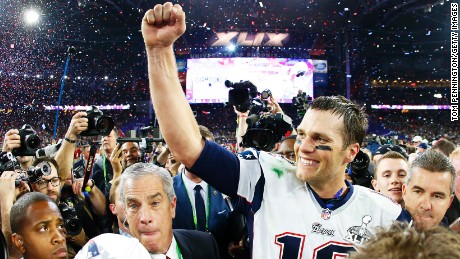
The Greatest Feeling in the World

I've been fortunate over the years to play on more winning teams than the law of averages suggests I should. From table tennis (ping-pong), to cricket, to Aussie rules I've enjoyed landing on teams with talented teammates. Even at extremely low levels of competition, the moment that a championship is sealed is a wonderful feeling.

Even if the event is a team table-tennis tournament at the local Baptist church in a small town, there's a winning euphoria that keeps a smile on your face for at least several hours at the end of a triumphant season.

I can only imagine the emotions that come with winning a championship that allows you to undeniably proclaim that your team, at this moment, is the greatest in the world.

In professional sports, these athletes have trained and played since they were barely in school to reach this moment. They've made many sacrifices. Their parents, girlfriends, spouses and children have made many sacrifices. Their coaches have invested hours of instruction into their careers. And in this instant as the final whistle, buzzer, or horn sounds it's all worth it. It makes grown men, manly men, cry for joy.

The Greatest Feeling in the World.

While very few people ever get to proclaim ourselves as the Greatest In the World at anything, most of us recognise the emotions:

  • The feeling we get one our wedding day;
  • The emotions we experience holding our newborn child for the first time;
  • The sensation of being accepted to college; or 
  • The thrill of a being offered a job we desperately need.
Shouldn't the Greatest Feelings in the World come from God?

I wonder how many of us connect the Greatest Feeling in the World with aspects of our walk with Christ?
  • The moment we're baptised? 
  • The moment we study with someone else and they commit their life to Christ?
  • A worship experience at large assembly?
  • The solitude of sitting in a dark room with God?
I suspect that many Christians have a difficult time answering this question because we don't have clear spiritual goals.

Athletes know what winning means. It's clearly defined. But many Christians pursue a standard of perfection that we know is impossible to achieve from the outset. I suspect that many church leaders don't do a great job of communicating spiritual goals. As a result, we do an even worse job of celebrating progress and achievements.

Winning a table tennis tournament against 12 other teams shouldn't produce a greater feeling of accomplishment than living for God. And neither should winning the Super Bowl.

Now, I'd like your input:

What are some significant goals Christians should celebrate that we might think of as "winning"?

Monday, January 26, 2015

Deflategate: Coming to Church Near You

You've heard the stories. When the Indianapolis Colts played the New England Patriots in the AFC championship a couple of weeks ago it was discovered that the footballs the Patriots used in the first half were about 15% too flat. After the officials inspected the balls before the game, they mysteriously lost 2 psi of air pressure by half time.

The suspicion is that the Patriots (or someone in their employ) let some air out of the ball because Tom Brady prefers to play with a softer football, and/or because it might help the running backs to grip the ball.  The fact that the Patriots scored 28 points after half time with the footballs back at their legal air pressure certainly challenges the issue of whether they obtained any real advantage with the softer balls.

Nonetheless, if the balls were deliberately deflated after the official inspection it's a pretty blatant rule violation. Since the Patriots already have a black eye when it comes to breaking rules (think Spygate) some pundits are calling for severe penalties over the air pressure issue. Personally, I don't see it as requiring more than a slap on the wrist and increased scrutiny in the future.

How big has this issue been?  For the last week, this discussion has dominated the sports talk airwaves. It has generated numerous memes on facebook. Sports websites have turned into science journals as they discuss how atmospheric and environmental conditions impact air pressure inside a football.

Oh, and the Super Bowl is this coming Sunday!  This won't distract at all.

The sad truth is that Deflategate routinely occurs in our churches. Let me demonstrate. 

Chuck: I came by the church building Monday morning and I noticed the doors were unlocked. Anyone could have just walked in there and then walked out with whatever they wanted. This is serious. Whose job is it to lock the building each Sunday?

Roger: This doesn't sound right. We'll look into it. Someone must know something.

Bill: It wasn't me. I'm never the last one to leave. I don't even know if the doors have locks, yet alone how to use them!

Tom: I have a key and I often use the locks, but there are other people as well. No one seems to have the specific responsibility of locking the building and we sure can't figure out who was the last person to leave yesterday!

Roger: This really is serious. Do we know whether or not the building is ever locked on a Sunday night?

Chuck: It's probably Bill. He's done this sort of thing before....

Bill: It definitely wasn't me. I've looked into it, and it's quite possible that due to the weather the door has swollen a little, maybe water in the wood, or warmer temperatures.  When that happens the door often jams, so it looks and feels closed, but if you really pull on it the lock wasn't engaged.

Roger: I think we need to take this to the elders. It's very serious. Maybe they'll want to bring in some door consultants. And if someone's lying, that's a spiritual issue...

Elders: We have a meeting this week. We should be able to allocate a couple of hours to discuss this.

Tom: Ha, Ha, Ha, Come on fella's, it's not that big a deal. Besides we've got this big evangelistic campaign coming up next weekend. Could we spend some time going over our plans for that?

Elders: Tom, we'd like you to come to our meeting. Once we get this matter resolved we can turn our attention to the plans for this weekend.

It really is this easy to let little things around the church take precedence over the important mission God has given us.

Gossip, complaining, accusing... all these negatives behaviours will just take the air out of a church. They distract us. They create discord. And they're not that important.

Of course we want the doors of the church building locked when no one's there. Of course we want to have a backup when the projector blows a bulb. Of course we don't want rubbish under the pews. Of course we want a million little things to be done "just right".

But we can't let any of these little things become the BIG THING in the life of God's People.
The saying is trustworthy, and I want you to insist on these things, so that those who have believed in God may be careful to devote themselves to good works. These things are excellent and profitable for people. But avoid foolish controversies, genealogies, dissensions, and quarrels about the law, for they are unprofitable and worthless. As for a person who stirs up division, after warning him once and then twice, have nothing more to do with him.  (Titus 3:8-10)

Wednesday, January 14, 2015

The Other National Football Championship

It's football's championship season! On January 10th a national college football championship was played. The winning team wore green and gold uniforms... but they weren't the Oregon Ducks.

No. This was the NCAA's 2nd tier championship: The Football Championship Subdivision (FCS). This year North Dakota State won their fourth consecutive FCS title.

Off the top of your head, do you know how many divisions there are of NCAA football?  Quick now... Don't Google it... Keep thinking...

The answer is four.

Did you get that right? Now can you tell me who won those four national championships?  I have no idea... So I went to the source: the NCAA website.

The answer is:
  • FBS: Ohio State University
  • FCS: North Dakota State
  • Div II: Colorado State - Pueblo
  • Div III: University of Wisconsin - Whitewater
You probably knew the FBS. Perhaps you knew the FCS. But Div II & III? I don't know that anyone other than current students, alumni and players' mothers knew those results!

The players in those lower divisions will almost certainly never play football professionally. They risk injury and take time away from their studies with no big pay day in sight. They win national championships, and no one knows about it.

The players on these teams train as long and as hard as the players on national TV on Monday night. They sweat and hurt just like the Buckeyes and the Ducks. But no one's watching.

Yet for these players each victory contains the same elation as the victories the big schools experience. Each loss hurts as much as it does for the big programs. Each personal failure causes a crisis of self-confidence just like the big boys. Each dominant performance makes them walk a little taller, as all athletes will tell you.

The only differences between most of the players on these teams are skills and physical limitations. Perhaps they didn't receive as high quality coaching in high school. Perhaps they'll just never be fast enough. Maybe their minds don't quite analyse the situation as quickly as the FBS players. But the passion they bring to each training session and each play is consistent throughout the divisions.


Churches are always looking for their members to get more involved. Most of the time they're not looking for leaders, they're looking for members willing to complete tasks. The baptistry needs cleaning. We need greeters in the parking lot in winter. We need someone to make coffee. There are never too many people willing to send cards of encouragement.

I wonder if too often we don't rank the importance of particular tasks and pay little attention to those we consider Div II or III.

Unlike the players on the Div II & Div III teams we often don't bring the same passion to the tasks we judge as less important. They require less skill. No one will notice them. No one cheers for us like they do the song leader, or the prayer, or the small group leader.

Jesus was the Messiah, but he wasn't seeking the limelight. If anyone deserved to have his name up in lights, it was God in the flesh. Yet Jesus gives us the example of someone willing to wash feet.

I wonder if our churches really do a good job of communicating the values of humility and service. Do we elevate the efforts of talented individuals while overlooking the work of humble servants of God? Do we portray to our church members that the people in the church that are in the public eye are more important than others? May God have mercy. 

We all have the same goal and we should all play a role, whether we're sweeping the floors in a minichurch of 80 or a megachurch of 8,000.

Whatever you do—whether you eat or drink or not—do it all to the glory of God! Do not offend Jews or Greeks or any part of the church of God for that matter. Consider my example: I strive to please all people in all my actions and words—but don’t think I am in this for myself—their rescued souls are the only profit.  1 Corinthians 10:31-33

Thursday, October 2, 2014

Sports - A Window Into Society

This is a short, self-serving post. Life has been busy and I haven't written for a while. As I reflect on the past few months in the sports world, I'm reminded the extent to which these athletes, who live in the spotlight, reflect the lives and challenges that we all face.


So far this year sports have gifted us with these topics of conversation:

  • April/NBA - Racist remarks by the owner of the LA Clippers, Donald Sterling, are recorded and leaked to the media. The resulting backlash from players and the public resulted in Sterling being forced to sell the Clippers franchise.
  • May/NFL - Michael Sam becomes the first openly gay player drafted in the NFL. In September he was signed to the practice squad of the Dallas Cowboys.
  • August/NFL - Ray Rice made a public apology after hitting his fiance. A few weeks later video of the incident was made public. As a result of the video Rice was dumped by the Baltimore Ravens and suspended indefinitely by the NFL. The resulting discussion has caused the NFL to radically change it's approach to domestic violence and launch a major education program for its teams and players.
  • September/NBA - More racial furor in the NBA as Atlanta Hawks GM Danny Ferry is recorded describing a player using racially derogatory terms.
  • September/NFL - Star running back, Adrian Peterson, is charged by Texas authorities for abusing his 4 year old son after a "whooping" with a switch resulted in substantial cuts and bruises.
  • September.Olympics - Olympic swimming superstar, Michael Phelps, was arrested for the second time for DUI.
  • October/NFL - The Dallas Cowboys wrestle with grace and forgiveness as Josh Brent returns to the team after 180 days in jail for killing his friend and teammate in an car accident while intoxicated.
So yes, I'm piggybacking on these terrible offenses (and I may have missed some) to highlight the value of blogs like God Meets Ball and the conversations they prompt.

There is a great likelihood that during the last few months the men in your church heard more about racism, parenting, and respecting their wives, on ESPN than they heard from their church all year.

The Bible contains so much teaching about loving our neighbours, and families, and it warns against the dangers of anger, alcohol and hate. Where do you want your church to receive its moral training?  How strongly do we want our men to hear God's standards rather than the opinions of media personalities pursuing ratings?


Further, just as the world of sports provides a lens into the homes of our communities, it reminds us of the challenges our families experience. Our members are touched to varying extents by racism, homosexuality, destructive parenting, and domestic violence. Our churches need to be places of truth, transparency and reality, not "putting on our Sunday best".
"Don’t be concerned about the outward beauty of fancy hairstyles, expensive jewelry, or beautiful clothes. You should clothe yourselves instead with the beauty that comes from within, the unfading beauty of a gentle and quiet spirit, which is so precious to God."      1 Peter 3:3-4
 What venues does your church have to discuss issues like those raised above?

Monday, August 25, 2014

Fantasy Evangelism (2014 Revision)

Fantasy Sports are a huge part of the sports industry in the United States. Various estimates I read value the industry at $2-5 billion per year. Most of that is advertising revenue on the various fantasy sports websites. Last weekend I attended a Buffalo Bills preseason game and one of the four scoreboards seemed dedicated to giving fantasy updates from around the league... for PRESEASON GAMES!!!!!!

So I got to thinking about how churches could use fantasy sports that so many of our male members are involved in as an evangelistic tool.

I can't believe this is a real thing!!!!!!!
In 2013 I worked in a couple of leagues to build community by having weekly awards. They were both ESPN leagues. At first I tried to use the message feature built in to the ESPN website, but it didn't work very well. I think guys go to the website to work on their team, not chit-chat about the season.

My other league was a 20 team league, which was a bit crazy. But another player started a Facebook group for the league members to discuss trades and trash talk. It had a lot more interaction. I suspect this worked better because people come to Facebook to chit-chat so are more willing to engage.

Within in the Facebook group I published weekly "awards" that I felt met my goal. It's not like all 20 guys commented on the post each week, but the awards created some continuity. They helped us keep track of how other teams were going. And they provided an opportunity for some more trash talk.

Here's the list I used:
  • Most Points Scored (Season)
  • Most Points Scored Against (Season)
  • Worst Winner (Weekly winner with the lowest score)
  • Biggest Loser (Losing team with the highest score)
  • Blowout of the Week (Matchup with the greatest winning margin)
  • Keeping it Close (Matchup with the smallest winning margin)
I also tried to include a weekly Trivia Tidbit. For example, "3 teams have an 8-3 record. 3 teams have a 7-4 record. 3 teams have a 6-5 record."

You may come up with different ways of creating relationships. It's my hope that my experiences might spark your creative juices. Just keep in mind that fantasy sports can be about a lot more than just winning.

Here are 10 Fantasy Football Commandments that I came up with last year that might also help out your fantasy league be an evangelistic tool.

  1. Use your imagination when inviting people to your league. Perhaps the unchurched husband of your members would like to get involved. Have you met a guy at the local diner or coffee shop who might like to get involved?
  2. Make sure you have a draft party. I know most drafts can be done on the computer, but remember the goal is face-to-face time. So take the time to get together and write it out. It's more work, but it will be worth it. Maybe use the church building or even better for building relationships would be using someone's home.
  3. As commissioner work hard to keep the emails and online comments (trash talk) going throughout the year. It's so easy to just let the league run on auto pilot. Community will only be built through intentional interaction.
  4. Do you have a church Christmas party or special event you can invite the unchurched participants to attend?
  5. Develop a list of awards so everyone still has an interest in participating. 
    1. Have a vote for the most creative team name.
    2. Keep track of the biggest win by an underdog.
    3. Longest winning/losing streak.
    4. Highest and lowest weekly scores over the course of the year.
    5. Team with the most injuries.
    6. Team with the most single digit losses.
    7. Anything else you can think of.
  6. Have physical trophies for the winner, runner-up, and maybe consolation winner. This will provide continuity from year to year. You could even have a plaque somewhere in the church if you want to go all out.
  7. You MUST have an end of season awards night. Bring everyone together and eat lots of guy food.
  8. Plan to watch a final or the Superbowl together. Many people have standing plans for the Superbowl, but it could work great for an earlier playoff game. 
  9. NEVER have a league prayer meeting for your fantasy teams!!! Did I need to include that?
  10. FOOD! Involve food whenever you can. It just makes all the get togethers work better.
If you can apply most of these suggestions, there's a very high likelihood that you'll know these guys a lot better at the end of the season than the beginning. Only God knows where that relationship will go from there.

I'm always looking for additional ideas, so please leave a comment if you have any.

Wednesday, August 13, 2014

Room to Grow

On Sunday Rory McIlroy won his fourth major golf championship: The US PGA Championship. In doing so he out played crowd favorite and winner of multiple majors, Phil Mickleson. He also staved off another up and coming young golfer in Ricky Fowler, and withstood a charge from world #4, Henrik Stenson.

McIlroy has now won 3 consecutive tournaments including two Majors. He is undoubtedly the hottest golfer on the planet and deservedly the #1 player in the world.

McIlroy is a golf prodigy and has had consistent success since first swinging a golf club at age 2. This photo montage by the BBC does a good job of tracking his career to this point.

In total, Rory has now won 4 Majors, joining Tiger Woods, Jack Nicklaus, and Bobby Jones as the only players to win 4 majors at the age of 25 of less. As Tiger Woods has now not won a major since 2008 Rory looks like the player most likely to assume Tiger's spotlight. This article and it's graphs provides a good summary of the immense challenge that lies ahead for Rory if he's to catch either of them.

Tiger won his last PGA Championship in 2007. At that time Rory was 17. He was a talented golfer who already had an impressive list of accomplishments, but he didn't even turn professional until later in 2007. As Tiger lifted the trophy at Valhalla in 2007 no one thought a 17 year old amateur golfer in Northern Ireland might have a legacy to one day match Tiger and even Jack Nicklaus.

But there were some people who believed in McIlroy's potential. His parents, his coaches, his friends all supported his dream of becoming a champion golfer. They invested in his career at an early age. They spent money on him. The spent time on him. They passed on their experiences and helped him improve areas of his game that had deficiencies. While Rory appropriately gains all the credit for his play and accomplishments the culmination of his practice, focus, and skill, it's intriguing to consider how much of this would have been possible without the support and encouragement he's received throughout his life.


I wonder if sometimes our expectations for young people in our churches are too low. Look around your church. Is there a chubby faced 17yo who might one day make a mighty impact in this world for God? Can you see that person? Is anyone spending time with that person and helping them grow? I wonder how many 17 year olds we leave to find their own way in life because we don't purposefully pass on our experience and help them improve life skills where they have deficiencies.

Many churches invest heavily in their youth and have vibrant youth ministries run by fantastic youth ministers. But I wonder if you, the reader of this blog, make a spiritual investment in the lives of any young people? Are you more likely to ask a teenage boy about trying out for the football team, or his backswing, than you are to pray with him? Do you ever pray with him?

Young people in the church need to know that they're valued. We do this not just by throwing money at them, but by letting them know that we care about them and believe that God has a role for them in His mission. We equip them and help them identify their spiritual gifts. We give them opportunities to participate in the work of God now as training for the rest of their lives.

Their responsibility is to equip God’s people to do his work and build up the church, the body of Christ. This will continue until we all come to such unity in our faith and knowledge of God’s Son that we will be mature in the Lord, measuring up to the full and complete standard of Christ.  Ephesians 4:12-13

BONUS MATERIAL: Since I started writing this post news has broken of Robin Williams death. As a tribute, here's his explanation of the origins of golf. :-)

Wednesday, July 16, 2014

Now What?


It's over.

I hate to be a spoiler... but you need to know... Germany won!

Yes, for the first time a European team won a World Cup tournament hosted in South America.

Maybe I need to tell you because you stopped watching after the four Asian teams were eliminated. Or perhaps after the US lost. Or maybe you tuned out when England, Italy and Spain failed to make it out of the group stage.

Whatever the case, "Now what?"

Do we return to our previously scheduled Major League Soccer (US version) schedule? Do we twiddle our thumbs waiting for the EPL to arrive in August and Australian FFA Cup to kickoff in late July?

Does most of the US population return to the stupor of summer as they count down the days for the NFL to commence?  Do they know soccer is still be played in the US right now?

I find it fascinating to observe the efforts of soccer enthusiasts and organisations in the US. In a real sense they're missionaries for something they love in a generally ambivalent foreign culture. They celebrate the success of the World Cup in the United States TV ratings and plot how they can capitalise on that moment of glamour and attention.

Churches operate in much the same way. My church is currently planning a Vacation Bible School. We hope to meet many families from the community. We're trying to find ways to let them know that our event is happening and that their kids will find it interesting.

We're praying that our event will go really well and that every kid (and their parents) that attends will be super impressed by all the enthusiastic Christians they meet that they will want to come back.

Here's where many churches fail. I've attended two VBS's with my 4yo so far this summer. The only invitation I've received to return to the church for their regular kids program was the back page of a handout I happened to pick up.

It's extremely frustrating to put hours of planning and work into hosting a great event. Then we meet families from the neighbourhood or friends of our members, and we have great conversations with them every day for a week. But then the only way to continue the relationship is for them to attend a church service on Sunday morning. For most unchurched people that's a huge step.


This year, I believe my church is on the right track. Two weeks after VBS we have Worship in the Park which after Easter is our largest attended event of the year. Then two weeks after that we have a movie night that will also launch a new Men's group for dads and husbands.

But this applies to more than VBS. Anytime we have a major event planned I always ask, "What's next?" We want to do more than just make contact with neighbours. Our church still has a long way to go as we seek to provide multiple gateways for our neighbours to meet us and through us to meet Jesus. We want to establish relationships with these people and multiple events give us greater opportunities to do so.

So what about soccer?

Soccer leagues and international confederations around world have a huge variety of major tournaments scheduled over the next few years. Australia will be hosting the Asian Cup in January and hoping to break through for their inaugural win in that tournament.

Meanwhile the "missionaries" in the US have a busy schedule with the Women's World Cup taking place in Canada in June 2015, and the Gold Cup starting a few weeks later in July. Then another major tournament is scheduled for July of 2016: The Copa America Centario (Pan-American Cup).

The Pan-American Cup will be "the single biggest tournament the United States competes in prior to the 2018 World Cup. The Gold Cup is fun and all, but what will happen in 2016 promises to be special. All ten CONMEBOL nations will be participating and they will rope in six CONCACAF nations including the United States, Mexico, the latest Caribbean champion, the latest Central American champion, and two other nations based off finishes in the 2015 Gold Cup. A tournament like promises to be unique in that a Pan-American Cup such as this has never been attempted before."

You can see a full schedule of major international tournaments for the next 4 years at THIS excellent page.

BONUS VIDEO: What did the head of the Football Federation of Australia think of the Socceroos World Cup campaign? What are his hopes for the future? Watch the video HERE.

Wednesday, June 25, 2014

Reflections of A Soccer Newbie

Hi. I’m new around here. But you can tell that if you just listen to me for a little.

I am just learning about socc…um…this sport. I know baseball, football (my kind!) and basketball well enough, but I’ve never really spent much time with soccer. I am drawn to soccer because the World Cup has stimulated national pride, and it is a slow sports time of year for me. I guess I want to give something else a go. Another reason why I’m interested is because of friends who know and love soccer. Most of my friends who are interested in soccer are the kinds of people I like to be around, so I’m giving this a shot.

The experience of getting in to soccer reminds me that there is often a big learning curve when trying anything new. The language of soccer is full of terms I don’t understand. For instance, who else calls their lineup a “side” or the uniforms a “kit?” The tactics of soccer are new to me as well. I am still trying to understand what the difference is between a 4-4-2 and the “diamond” that the USMNT is fond of forming. On the surface, soccer is the simplest sport on the planet, but there are textures and layers that make this a deep, cerebral sport as well.

So what is making me stay with it?

1. A welcoming community. My friends who are in to futbol have accepted a neophyte like me. During matches I often text a friend or two who are more than happy to talk to me about tactics and some of the “game within a game” moves that are being made. I really enjoy their insight and it makes it fun for me.

2. Enthralling stories: The more I watch and learn, the more I find out about the stories around the game. Today, I watched a grown man bite another player. This was unusual behavior for sure, but within a few minutes I learned that this was the third time he’s done this! Sorry Suarez. You are going to have to walk alone on this one. Then there are the stories I am learning surrounding my USA team like the Donovan decision, and the sometimes enigmatic Jurgen Klinsmann. Dempsey is a hero with a broken nose. Altidore is a tragic figure. Bradley is playing for redemption and on and on. I am interested in the matchups and the matches more because I am learning the stories surrounding the sport.

3. High stakes: The World Cup has the highest stakes of all the sporting events in the world. With soccer being the world’s most popular sport, the World Cup provides all the drama one could hope for with the highest international honors. Who couldn't want their country to do well in this tournament?

My experience as a soccer newcomer makes me think about those who are new to following Jesus. I have been a Christian my whole life. I cannot remember a time when I did not know about Jesus, but I understand that following Jesus can make one feel like an outsider with a steep learning curve! The language we Christians use can be dense. We do things that don’t make sense. We talk about sacrificing time on Sundays for worship where we do things like sing publicly. Who does that? We intentionally step back from our maximized lifestyle by committing to give of our finances to others. This doesn't make sense. We believe that we can have direct access to God in prayer. And then there are complicated doctrines that make PhD candidates sweat. Following Jesus can be complicated. I get it.

But here’s why I think you should stick with it.

1. A welcoming community: When you follow Jesus with others you will find a community that will accept you, care for you, and show you the love of Christ. My life has been so thoroughly shaped by the community of Jesus followers that I cannot imagine me without the Church.

2. Enthralling Stories: Face it. The claim that Christians make is the biggest story ever told! We believe Jesus, the Son of God, died on a Roman cross but God raised him from the dead. This cycle of resurrection is the core story of Christians and we find ourselves riffing this tune continually. The possibilities that open up when we live resurrection are endless and engaging. Christians should tell the best stories.

3. The Highest Stakes: We believe that God is restoring all things and God is using the Church as agents of this reconciliation. Christians can sense that all time and creation is heading someplace. And we want to be a part of what God is doing!

If you are getting in to Jesus, I encourage you to find a community, hear the stories, and pay attention to the high stakes. I think you will find this the most meaningful pursuit in life!

Jordan Hubbard is the senior minister at the Belton Church of Christ in Belton, TX (in Central Texas). He is married to Debbie and they have 3 children. Jordan enjoys baseball and football (the American kind) and is just learning about futbol. He's a Dallas Cowboys fan, so he's accustomed to having his heart broken. You can check out Jordan's messages at www.beltonchurch.com and when he blogs it is at www.jordanhubbard.wordpress.com. You can also follow him on Twitter @jordanchubbard.

Wednesday, May 21, 2014

The War of Attrition


Last week this blog post highlighted the importance of not allowing complacency to stunt our growth early in our faith journey. This week, regular contributor Jeremy Hoover looks at the lessons we can learn from the other end of the season, the Playoffs.

The NHL season, and in particular the Stanley Cup playoffs, represent a war of attrition.

The entire 82-game NHL season is a war, out of which only half the teams survive. Only 16 of 32 teams make the playoffs. The season is a war of attrition. It wears teams down in an attempt to see who can endure and outlast. Teams may start well, but they also have to end well. One example of this is the Toronto Maple Leafs, who began the season with a very successful start through the first twelve games, only to score points in just eight of their last twenty-two games and fall out of a playoff spot.

The playoffs are a war of attrition. Playoff teams engage in up to four rounds of a best-of-seven games format. This means that the two teams that play for the Stanley Cup can potentially play an extra 28 games, or fully one-third of what they already played in the regular season.

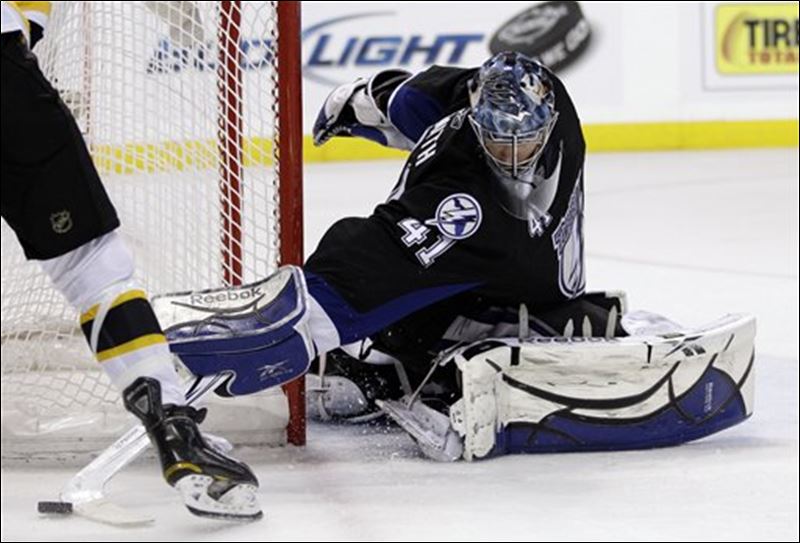
The playoffs are tough. They wear teams and players down. Every year it seems as though one team that was fine-tuning for a playoff run takes a big hit through injury and suffers a playoff loss. One example of this is the Tampa Bay Lightning, who lost their top goalie, one of the best in the league this year, to a knee injury in the last week of the season. This loss was devastating and led to the Lightning being swept in the first round.

The team that swept the Lightning, the Montreal Canadiens, suffered a devastating injury of their own. In game one of the Eastern Conference finals, their starting goalie, one of the top goalies in the league and an Olympic gold medal-winning goalie, suffered a knee injury and is out for at least the length of the Eastern Conference finals.

The playoffs force teams to reckon with the forces of attrition and to find ways to carry on. Often the team who wins the Stanley Cup is the team who was able to endure and outlast all others. The key is perseverance. Teams that keep focused, don't lose their cool, avoid serious injury, and press on are the teams that most often win it all.

Many of our churches look like this. We start well but get bogged down in the middle of our "season." We lose a few games and we begin looking for a quick fix, a blockbuster trade, or something to help. Attendance is low, we struggle to find ministry leaders, or we notice spiritual lethargy and are unsure how to overcome it. 

Perhaps we find our churches gaining momentum at the right time, only to be hit right then with a major injury in the form of a personality conflict, a major fight within the church, or a leadership problem. 

Or maybe we feel poised to make a "playoff run"--there is a specific ministry we targeted to build evangelistic zeal--but we fizzle out because our people became tired.

The key is in these situations, the way to avoid the war of attrition waged against us, is to persevere.

In two different places in 1 Timothy, Paul urges Timothy to persevere. In the first place, he provides Timothy with a list of things to teach, a way of life that will instruct people through action, and an encouragement to be diligent. He tells Timothy to persevere in these things (1 Tim. 4:11-16). Later, he charges Timothy to flee from the temptations of wealth and to "pursue righteousness, godliness, faith, love, endurance and gentleness" and to "fight the good fight of the faith" by taking hold of eternal life and persevering (1 Tim. 6:11-12).

If we follow Paul's advice to Timothy, we will be able to overcome the forces of attrition that work against us because our focus will be on the eternal nature of the ministry we provide, not the day to day goings on the physical management of that ministry. Like Timothy, we can persevere to the end.

What helps you to persevere in your faith, ministry, or life when adversity strikes?